Esther Rantzen: Television Career, Childline and Lasting Legacy
The inspiring story of the British broadcaster who transformed popular television into life-changing charity work

Introduction
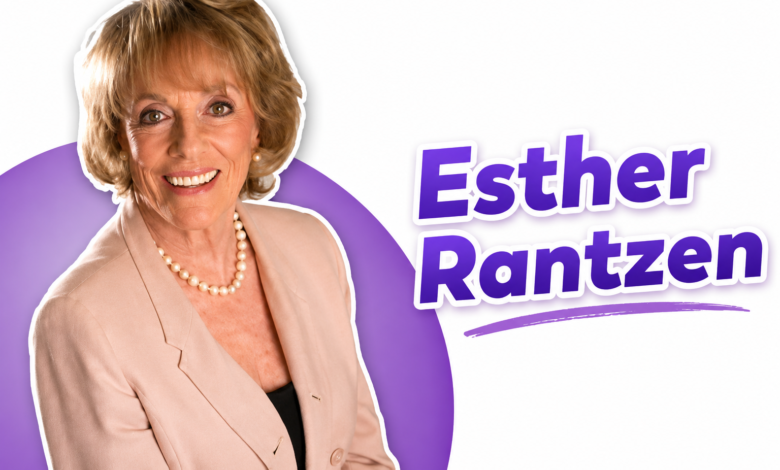
Dame Esther Rantzen is a British television presenter, journalist, producer, author and charity campaigner.
She became a household name through the BBC consumer programme That’s Life!, which combined serious investigations with humour and unusual stories. However, her greatest public impact came through founding Childline for children and The Silver Line for older people.
Her career shows how television can do more than entertain. It can expose problems, support vulnerable people and create services that continue helping millions long after a programme has ended.
Esther Rantzen Quick Bio
| Detail | Verified information |
|---|---|
| Full name | Dame Esther Louise Rantzen |
| Professional name | Esther Rantzen |
| Date of birth | 22 June 1940 |
| Age | 86 years old as of August 2026 |
| Birthplace | Berkhamsted, Hertfordshire, England |
| Nationality | British |
| Profession | Television presenter, journalist, producer, author and campaigner |
| Education | English at Somerville College, University of Oxford |
| Famous for | That’s Life!, Childline and The Silver Line |
| Husband | Desmond Wilcox, from 1977 until his death in 2000 |
| Children | Three |
| Grandchildren | Five |
| Major honours | OBE, CBE and DBE |
| Current title | Dame Esther Rantzen DBE |
Rantzen’s full birth date is publicly recorded as 22 June 1940. Her official profile confirms that she was born in Berkhamsted and built careers in broadcasting, writing and campaigning.
Early Life and Education
Esther Louise Rantzen was born in Berkhamsted, Hertfordshire, in 1940.
She spent part of her childhood in London and also attended school in the United States when her family lived in New York for a period. She later studied at North London Collegiate School.
In 1959, she entered Somerville College at the University of Oxford to study English.
While at Oxford, Rantzen became involved in student theatre. She performed, helped organise productions and developed the communication skills that later became important in her broadcasting career.
She graduated with an English degree and eventually became an Honorary Fellow of Somerville College. Oxford has also recognised her contribution to broadcasting and social activism.
Beginning of Her BBC Career
Rantzen did not immediately become a famous television presenter.
She joined BBC Radio as a sound-effects assistant. The role gave her early experience of how programmes were created behind the scenes.
She later moved into television research and production. In 1968, she became a researcher and reporter for Bernard Braden’s consumer programme Braden’s Week.
This work taught her how to investigate complaints, interview members of the public and explain difficult issues in simple language.
Like Martin Stew’s television journalism career, Rantzen’s journey developed through research, reporting and the ability to make complicated subjects understandable to ordinary viewers.
Breakthrough With That’s Life!
Rantzen’s major breakthrough arrived in 1973 when she became the producer and presenter of That’s Life!.
The programme remained on BBC television for 21 years. At its most popular, it attracted audiences of up to 22.5 million viewers.
That’s Life! was unusual because it mixed serious consumer investigations with funny signs, talking animals, strange products and entertaining stories sent in by viewers.
Its campaigns covered subjects including:
- Consumer rights
- Unsafe products
- Seat-belt use
- Playground safety
- Organ donation
- Medical awareness
- Child protection
- Unfair treatment by businesses and public services
The programme helped viewers understand that an individual complaint could reveal a much larger national problem.
Its mixture of journalism and accessible television helped make Rantzen one of Britain’s most recognised presenters. Her long public career belongs to the same broad tradition as Richard Madeley’s work in British television and Ulrika Jonsson’s media journey.
Rantzen’s official biography states that she has appeared in more than 2,000 television programmes across documentaries, talk shows, reality television, news and entertainment.
The Famous Nicholas Winton Television Moment
One of the most remembered moments from That’s Life! involved Sir Nicholas Winton.
Winton had helped rescue hundreds of mainly Jewish children from Czechoslovakia before the Second World War. For many years, his work was not widely known.
During a special television moment, he was introduced to people whose lives he had helped save. Many of the audience members around him were also children he had rescued.
The emotional scene later became one of the most widely shared moments in British television history.
It demonstrated Rantzen’s ability to use television to reveal important human stories rather than focusing only on celebrity entertainment.
Founding Childline
Rantzen’s most important achievement began with a television programme about child abuse.
The response showed that many young people needed a private and trusted way to ask for help. Rantzen therefore helped create Childline, a free and confidential helpline for children and young people.
Childline officially launched on 30 October 1986.
The response was immediate. According to the NSPCC, approximately 50,000 attempted calls were made on its opening night.
Rantzen chaired the organisation for 19 years and trained as a volunteer counsellor. She later became President of Childline.
Childline eventually became part of the NSPCC. The organisation reports that more than six million in-depth counselling sessions have taken place since its launch. Its helpline model has also been copied in around 150 countries.
Readers can learn more about her broadcasting and charity journey through the official Esther Rantzen website.
Why Childline Became So Important
Before Childline, many children found it difficult to speak openly about abuse, bullying, family problems or emotional distress.
They might have feared that adults would not believe them. Some did not know which person or organisation could help.
Childline gave children a service designed specifically for them. They could speak confidentially to trained counsellors without being judged.
Over time, children contacted the service about many different issues, including:
- Abuse and neglect
- Bullying
- Family conflict
- Loneliness
- Anxiety
- Eating disorders
- Self-harm
- Suicidal thoughts
- Problems at school
- Difficult relationships
Childline became more than a telephone number. It helped establish the idea that children’s experiences should be listened to and treated seriously.
This focus on honest discussion connects with the work of journalist and author Claire Cohen, whose public writing also examines subjects that people may find difficult to discuss openly.
Founding The Silver Line
Rantzen later turned her attention to loneliness among older people.
After the death of her husband, Desmond Wilcox, she publicly discussed the loneliness and isolation she had experienced. Many older people contacted her to share similar stories.
This response helped inspire The Silver Line.
The service began as a regional project in 2012 and launched nationally in November 2013. It offers free, confidential conversation, friendship and support to older people.
The Silver Line joined Age UK in 2019 and continues to operate as a telephone service available 24 hours a day, every day of the year.
Information about the current service is available from Age UK’s Silver Line Helpline.
Other Television Programmes
Although That’s Life! remains her best-known television programme, Rantzen created and presented many other productions.
Her major television work includes:
- The Big Time
- Hearts of Gold
- Children of Courage
- Esther
- How to Have a Good Death
- Winton’s Children
- Strictly Come Dancing
- I’m a Celebrity… Get Me Out of Here!
- First Dates
The Big Time gave ordinary people opportunities to test their abilities in professional situations. One of its most famous discoveries was singer Sheena Easton.
Hearts of Gold celebrated ordinary people who had performed generous or courageous acts without expecting fame or payment.
Rantzen also created television discussions about childbirth, stillbirth, mental health, disability, palliative care and the experiences of vulnerable people.
Her ability to move between reporting, interviews and public-interest programming can also be seen in the wider development of broadcasting careers such as Isa Guha’s transition into television presenting.
Career as an Author and Columnist
Rantzen has written books about television, family experiences, Childline and growing older.
Her published works include:
- Esther: The Autobiography
- A Secret Life
- Running Out of Tears
- Older and Bolder
- Ben: The Story of Ben Hardwick
- Baby Love
- Death by Television
- Kill the Chocolate Biscuit
Her writing combines memories, humour and discussions of difficult social issues.
She has also contributed articles and columns to British newspapers and magazines. Her subjects have included broadcasting, ageing, loneliness, charity work, family life, serious illness and assisted dying.
Like Caroline Hutton’s journalism and public-relations career, Rantzen’s professional story shows how writing and communication can create influence outside traditional television.
Marriage, Children and Family Life
Esther Rantzen married award-winning documentary filmmaker and television producer Desmond Wilcox in 1977.
They remained married until his death in 2000.
The couple had three children. Rantzen’s official profile also states that she has five grandchildren.
Family has remained an important part of her later life. She has often spoken about the happiness she receives from her children and grandchildren, particularly while living with serious illness.
She lives in the New Forest area of Hampshire, a place that has been closely connected with her family life.
Awards and Royal Honours
Rantzen has received major recognition for broadcasting and charity work.
Her confirmed honours include:
- OBE in 1991 for services to broadcasting
- CBE in 2006 for services to children and young people
- DBE in 2015 for services to children and older people through Childline and The Silver Line
The 2015 New Year Honours officially recognised her work supporting children and older people.
She also became the first woman to receive BAFTA’s Richard Dimbleby Award.
Other recognised achievements include awards from the Royal Television Society, lifetime-achievement honours and several honorary doctorates and fellowships.
Cancer Diagnosis and Public Health Update
In January 2023, Rantzen publicly announced that she had lung cancer which had spread.
She later described the illness as stage-four lung cancer. She continued receiving treatment and speaking publicly about her experience.
In January 2026, Rantzen told Sky News that she understood there was no cure for her condition. She said treatment had delayed the cancer for around three years and allowed her to spend additional time with her family.
Her health is a private matter beyond the details she and her family have chosen to share publicly. For that reason, unsupported medical predictions and rumours should not be treated as fact.
Assisted-Dying Campaign
Rantzen has become a prominent supporter of changing assisted-dying laws in England and Wales.
She has argued that terminally ill adults should have the right to choose an assisted death under strict legal and medical safeguards.
Her position has created a major national discussion.
Supporters believe assisted-dying legislation could give terminally ill people greater choice and protection from unbearable suffering. Opponents raise concerns about pressure, safeguarding, disability rights and the need for better palliative care.
Rantzen has continued discussing the issue through interviews, newspaper articles and messages to Parliament while living with terminal cancer.
Her campaign is based on her publicly stated view that people facing terminal illness should be able to make carefully protected decisions about the end of their lives.
Public Image and Values
Rantzen’s public image has been shaped by direct communication, humour and a willingness to discuss subjects that television once avoided.
Her work repeatedly supports several important ideas:
People should be heard
A complaint from one consumer, child or older person may reveal a much larger social problem.
Children deserve to be believed
Childline was built around the idea that children need a safe place where adults will listen without immediately judging them.
Loneliness is a serious issue
The Silver Line showed that loneliness among older people can affect health, confidence and quality of life.
Television can create change
Entertainment and public service do not need to be separate. A popular programme can make people laugh while also exposing injustice.
Action should not be delayed
The motto displayed on Rantzen’s coat of arms is “If not now, when?” It reflects her belief that important problems should be addressed rather than endlessly postponed.
Major Career Timeline
1940: Born in Berkhamsted, Hertfordshire.
1959: Began studying English at Somerville College, Oxford.
1960s: Joined BBC Radio as a sound-effects assistant.
1968: Became a researcher and reporter for Braden’s Week.
1973: Became producer and presenter of That’s Life!.
1977: Married Desmond Wilcox.
1986: Launched Childline.
1991: Received an OBE.
1994: That’s Life! ended after 21 years.
2000: Desmond Wilcox died.
2006: Received a CBE.
2012: Began The Silver Line project.
2013: The Silver Line launched nationally.
2015: Became Dame Esther Rantzen.
2019: The Silver Line joined Age UK.
2023: Publicly announced her lung-cancer diagnosis.
2026: Continued to be recognised for her broadcasting, charity legacy and assisted-dying campaign.
Frequently Asked Questions
Who is Esther Rantzen?
Esther Rantzen is a British television presenter, journalist, author and charity campaigner. She is best known for That’s Life!, Childline and The Silver Line.
How old is Esther Rantzen?
She is 86 years old as of August 2026. She was born on 22 June 1940.
What television programme made Esther Rantzen famous?
She became famous as the producer and presenter of the BBC consumer programme That’s Life!.
Did Esther Rantzen create Childline?
Yes. She founded Childline, which officially launched in October 1986 as a confidential helpline for children and young people.
Why did she create The Silver Line?
She created The Silver Line to support older people experiencing loneliness and isolation.
Was Esther Rantzen married?
She married documentary filmmaker Desmond Wilcox in 1977. Their marriage continued until his death in 2000.
How many children does Esther Rantzen have?
She has three children.
Why is she called Dame Esther Rantzen?
She received a DBE in the 2015 New Year Honours for services to children and older people through Childline and The Silver Line.
Is Esther Rantzen still campaigning?
Yes. Her recent public campaigning has focused mainly on assisted-dying legislation and the experiences of terminally ill people.
Final Words
Esther Rantzen changed the meaning of a television career.
She did not limit her work to presenting popular programmes. She used broadcasting to expose consumer problems, discuss difficult experiences and encourage the public to help vulnerable people.
Childline gave millions of children a confidential place to seek support. The Silver Line created friendship and conversation for older people experiencing loneliness.
Her television programmes may belong to an earlier period of British broadcasting, but the services created through her campaigns continue to matter.
Her lasting legacy is simple but powerful: listen carefully, take people seriously and turn public attention into practical action.